
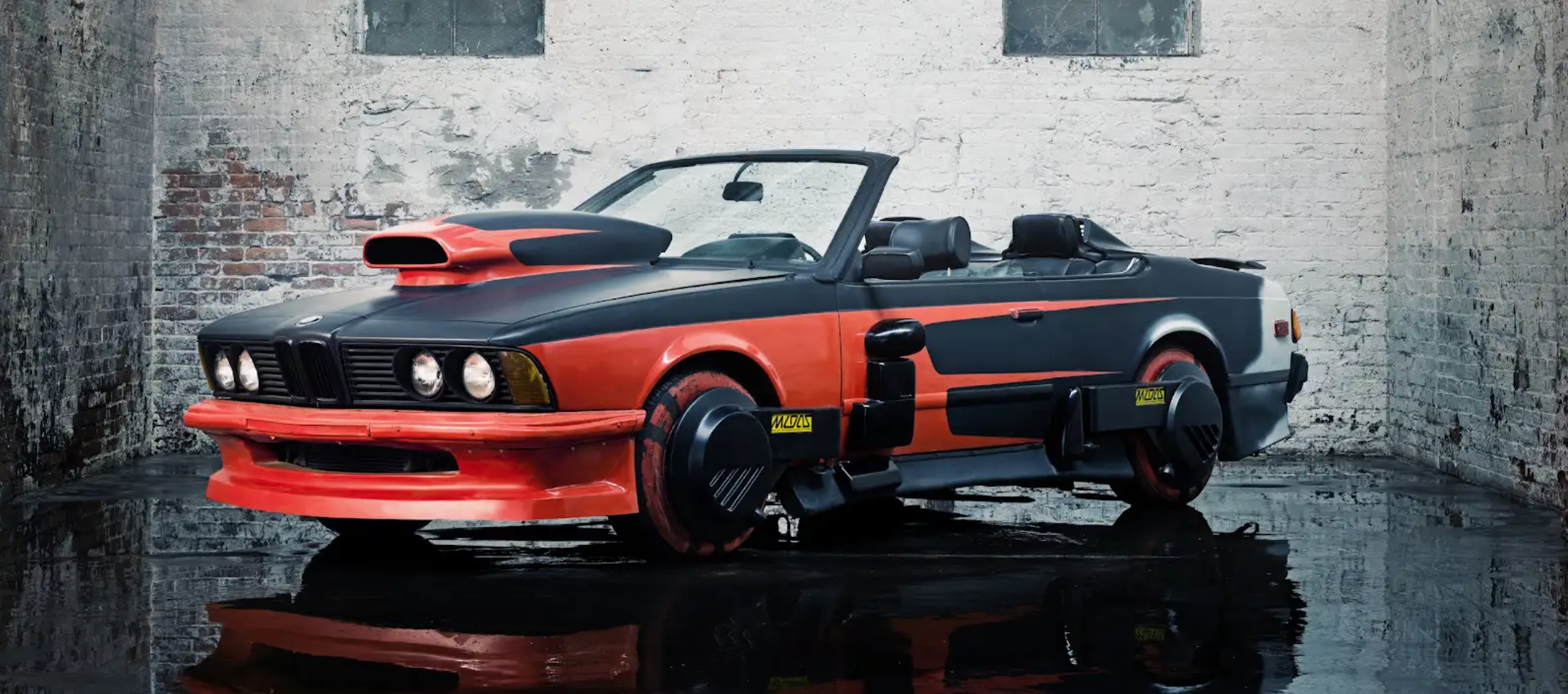
That BMW…
Do You Remember… The Future?
We’ve been promised flying cars forever. Movies, television, magazines — for decades, the future was always right around the corner, and apparently the first thing we were all going to do when we got there was stop driving on the ground.
So where are they? Well, for a while, I had one sitting in my backyard. Okay, technically it was still “just a car.” But on screen, it flew.
And it wasn’t the DeLorean. It was Griff Tannen’s BMW from Back to the Future Part II.
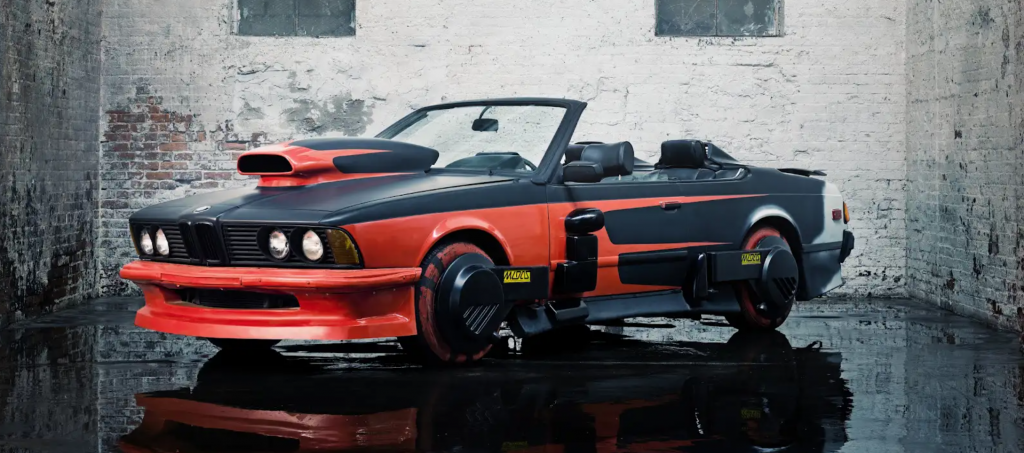
It didn’t always look like this.
The Griff Car
In Back to the Future Part II, Marty McFly travels forward to October 21, 2015 and discovers a future full of hoverboards, self-lacing shoes, video walls — and flying cars. One of those cars belonged to Griff Tannen.
Underneath all the futuristic movie hardware was an early BMW E24 6-series coupe, a gray-market European car complete with German instrumentation. Of course, Hollywood wasn’t particularly concerned with preserving a nice old BMW. They needed something that looked like it belonged in 2015, so they cut it up.
How a BMW Became a Car From 2015
The car was originally sourced through Roger’s Arizona Picture Cars after the production reportedly asked for essentially “any European car.” From there it went to Jay Ohrberg’s Star Cars, where the transformation began.
The roof was removed. Frame connectors were added underneath. A giant hood scoop went on the front, along with ground effects, a rear wing, hover-conversion hardware and other fiberglass pieces. Then the whole thing received the black-and-red paint scheme seen in the movie.
The reinforcement underneath had a practical purpose. For the flying-car sequences, the car could be lifted and lowered with equipment beneath it. It didn’t need to actually fly — it just had to look convincing for a few seconds on screen.
That’s an important thing to remember about movie cars. They’re built for the camera, not for the next 30 years.
Hollywood Wasn’t Kind to It
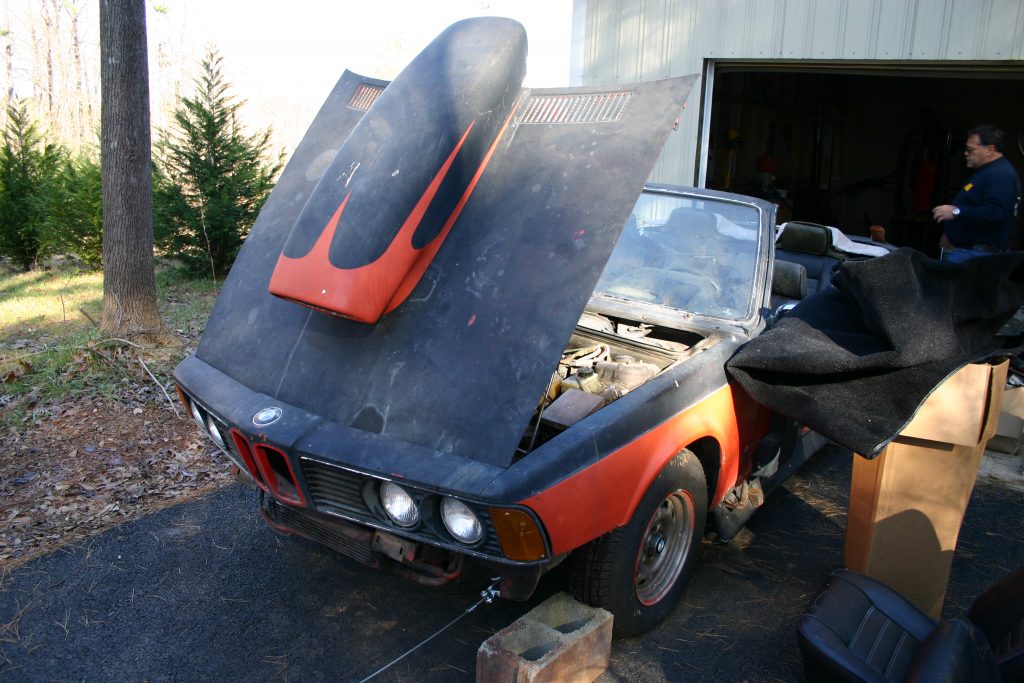
After filming, the BMW eventually returned to Arizona Picture Cars and later made its way to Burkett’s Movie Car Museum in Branson, Missouri. Somewhere along the way, the original rear deck was stolen during transport. A replacement was fabricated, but the car continued to deteriorate.
And then it sat outside. For a long time.
By the time I eventually got involved, the car was rough. Really rough. The paint was badly weathered, fiberglass pieces were damaged or missing, parts were lying loose inside the car, and the interior was tired, dirty and incomplete.
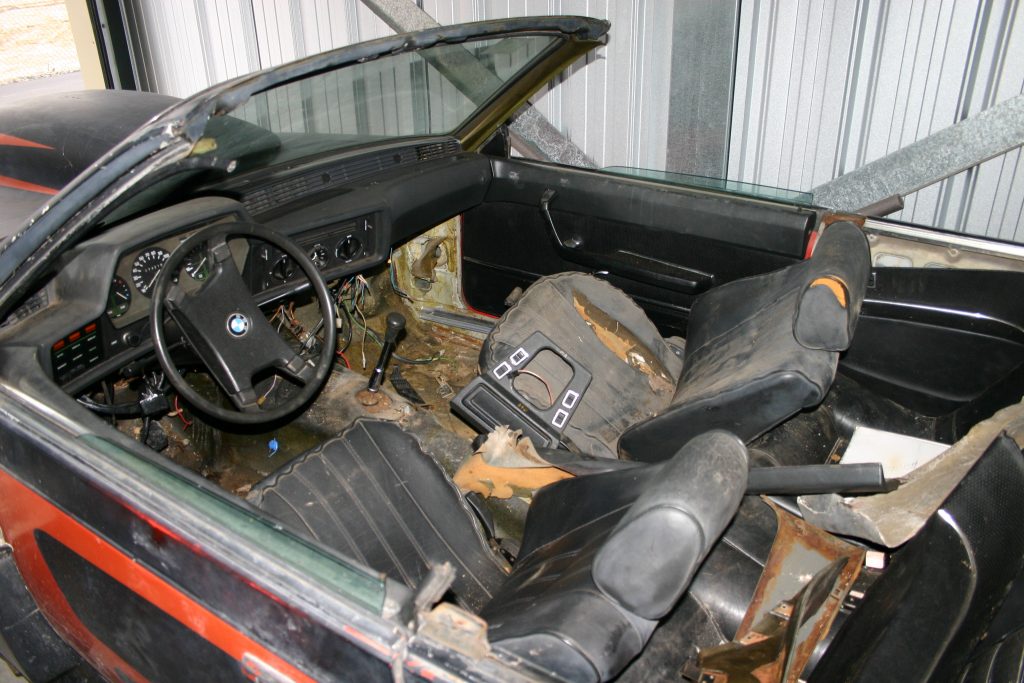
But underneath all of it was still the actual BMW that had appeared in Back to the Future Part II. That mattered to me.
The First Rescue
Before I ever owned the car, Tate Coghlan had already done a tremendous amount of work just getting it functional again. It had fuel-system issues, electrical issues and missing interior pieces, followed by things like a failed fuel pump and clutch problems.
This wasn’t a pristine collector car being polished for a show. It was an aging movie prop being dragged back toward being an actual automobile.
The Movie Car I Didn’t Buy
My path to the Griff BMW actually started with a completely different Back to the Future car. In January 2004, I found the “Texaco Car” from Back to the Future Part II on eBay, and I wanted it badly.
I bid on it, and with something like six seconds left in the auction, I lost it. That was that.
But during that process I had been talking with Tate, who had the Griff BMW. After losing the Texaco car, I told him that if the BMW ever came up for sale, I’d like to know. Then I forgot about it.
Until November.
“You’re Dead a Long Time”
In November 2004, Tate contacted me. The Griff BMW was for sale, and he was giving me the first opportunity to buy it.
Naturally, the timing was terrible. I had just bought a house, and I had also just started 7Blade.com. Buying a giant restoration project that happened to be a battered Hollywood movie car was not exactly the responsible financial decision.
I mentioned the situation to a friend of mine in England. His response was simple:
“You’re dead a long time.”
That was pretty much all it took. I bought the car — not because I thought it was going to be some brilliant investment, but because it was a piece of movie history and somebody needed to keep it from disappearing.
The Road Trip
On December 17, 2004, my father and I climbed into my Jeep and headed south from Connecticut to Georgia to pick it up. It was roughly a 16-hour drive.
Looking back, that trip means almost as much to me as the car itself. It was just my father and me on the road, hauling this ridiculous piece of Back to the Future history halfway across the country.
We loaded the BMW onto the trailer and started home.
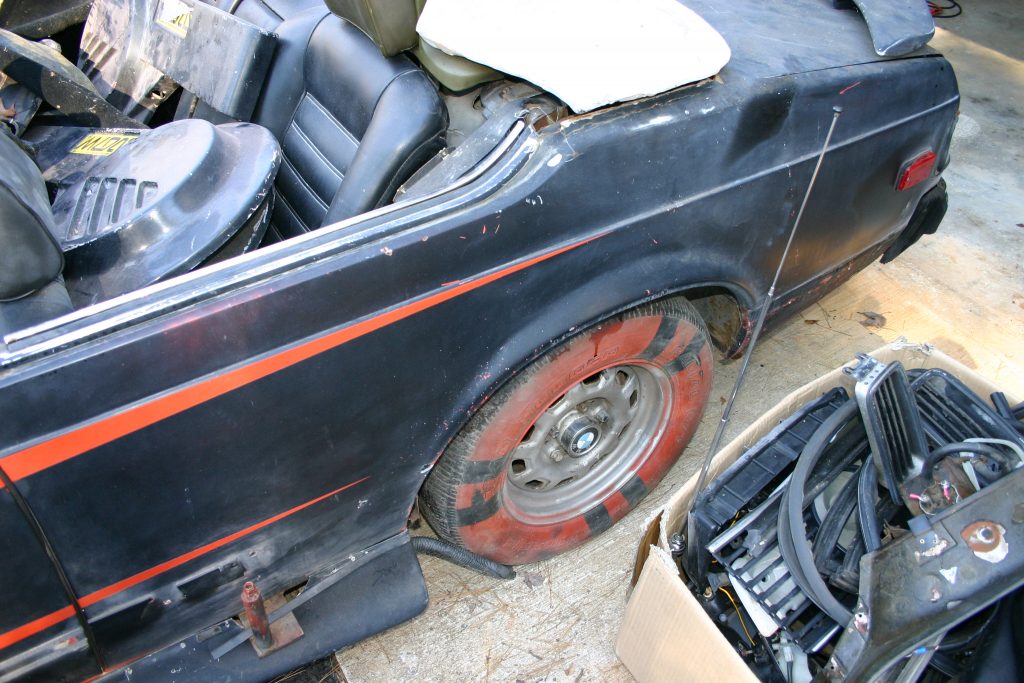
The return trip included an overnight stop in Florence, South Carolina. Then the weather turned. Around Washington, D.C. and the Beltway, we hit a blizzard, and at points we were creeping along at maybe 15 mph with a movie car sitting on the trailer behind us.
We finally got home around 1:00 in the morning. And now I had Griff Tannen’s BMW.
That was the easy part.
Now I Had to Restore It
The car was stored while I started gathering parts and figuring out exactly what could be saved. The first major goal was getting the interior back together.
On January 10, I brought the interior to Linden’s Auto Interiors in Canterbury, Connecticut. I took leave from work and spent time there helping with the process. The interior had been stripped, weathered and filled with loose pieces.
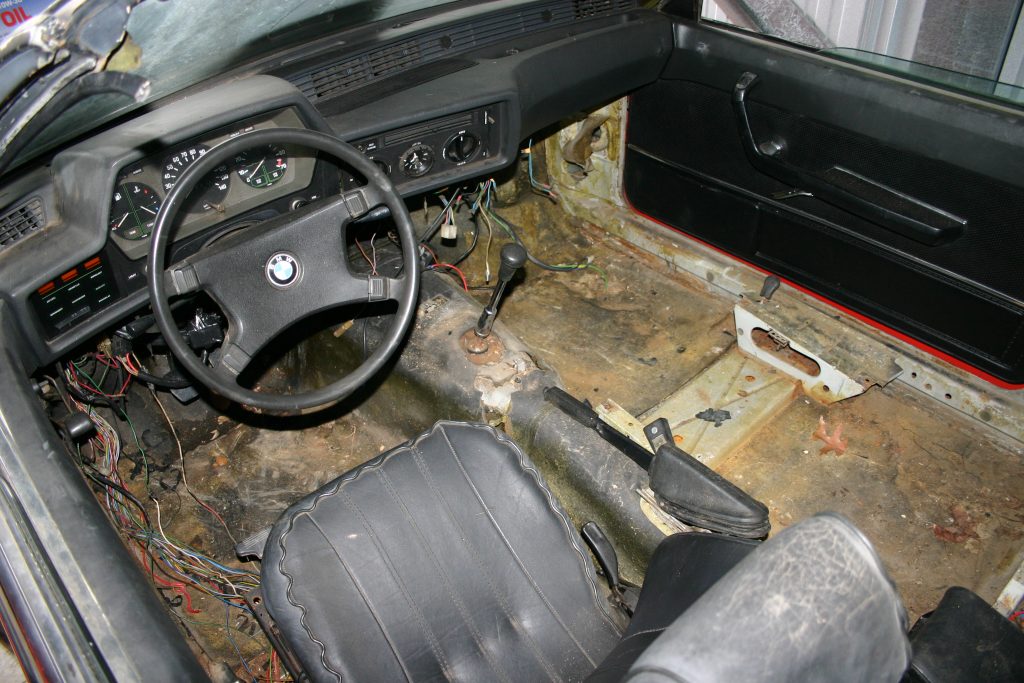
Slowly, it started looking like a BMW again.
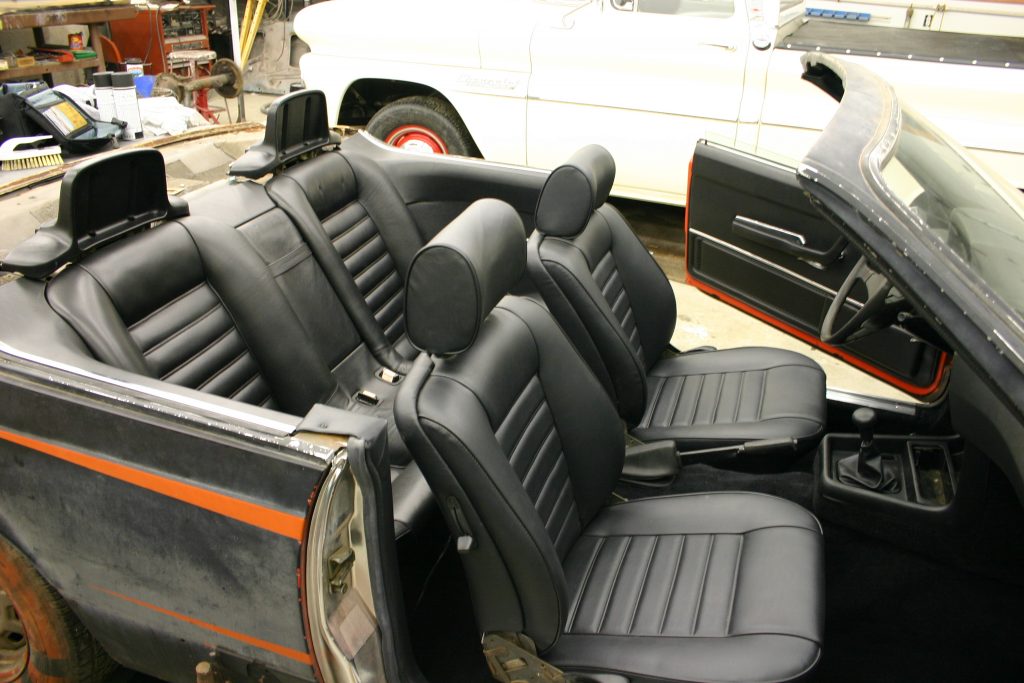
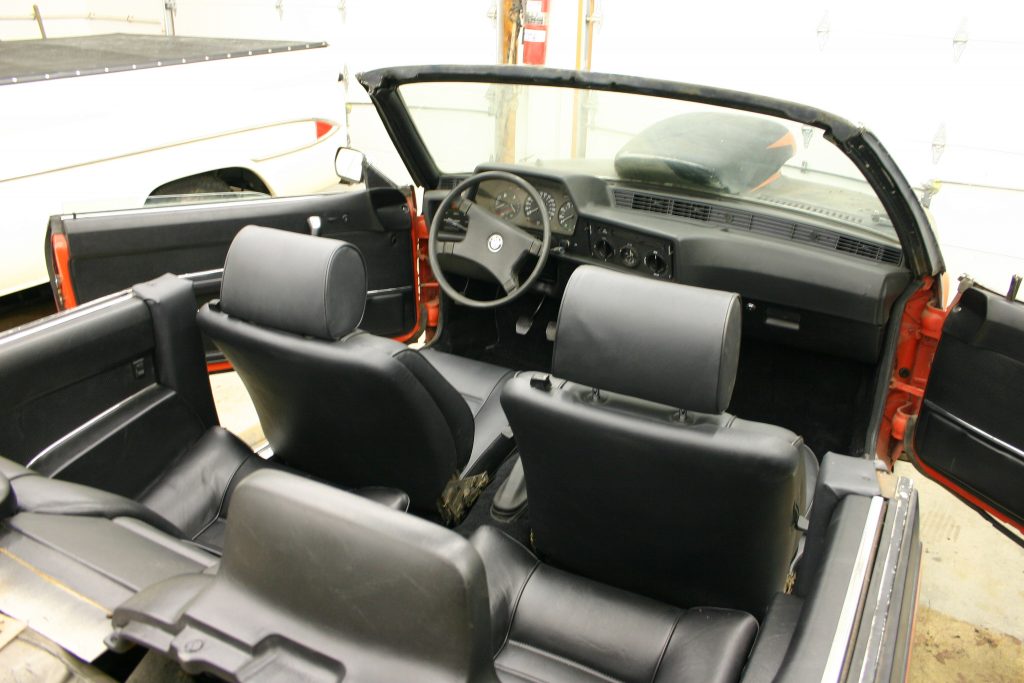
That was the first major psychological victory. You could sit in it and see a car again instead of a pile of movie-prop debris.
The exterior was another story.
Two and a Half Weeks
At some point I committed to bringing the BMW to a show at the then Connecticut Expo Center. That created a small problem: we had roughly two and a half weeks to finish the exterior.
This included repairing existing movie pieces, rebuilding missing pieces, fixing decades of damaged fiberglass, sanding the car, priming it, painting it and putting everything back together. There was no leisurely restoration schedule.
It was basically: Go.
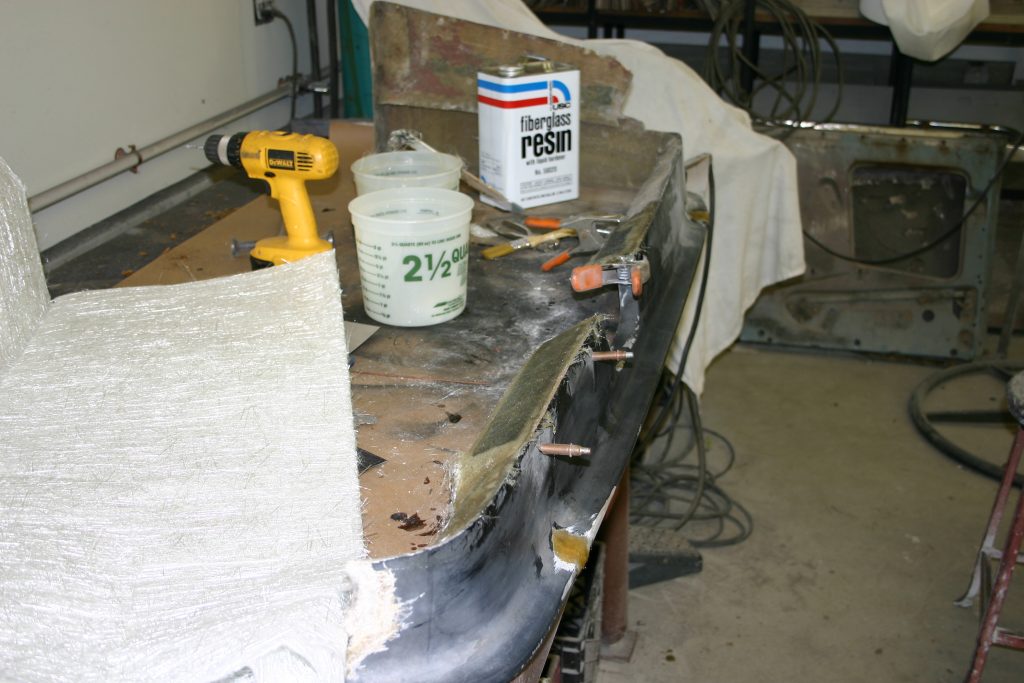
A lot of the work involved parts that had never been intended to survive this long. Fiberglass was cracked, edges were broken, mounting points were damaged, and some pieces were missing entirely.
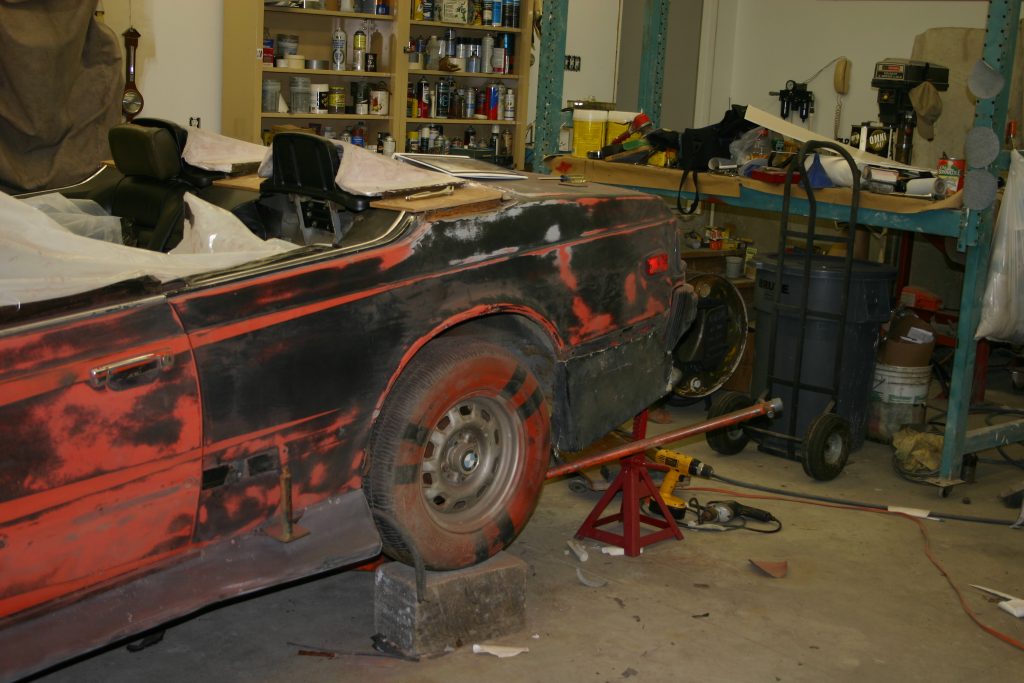
We repaired what we could and recreated what we couldn’t.
Rebuilding the Rear Deck
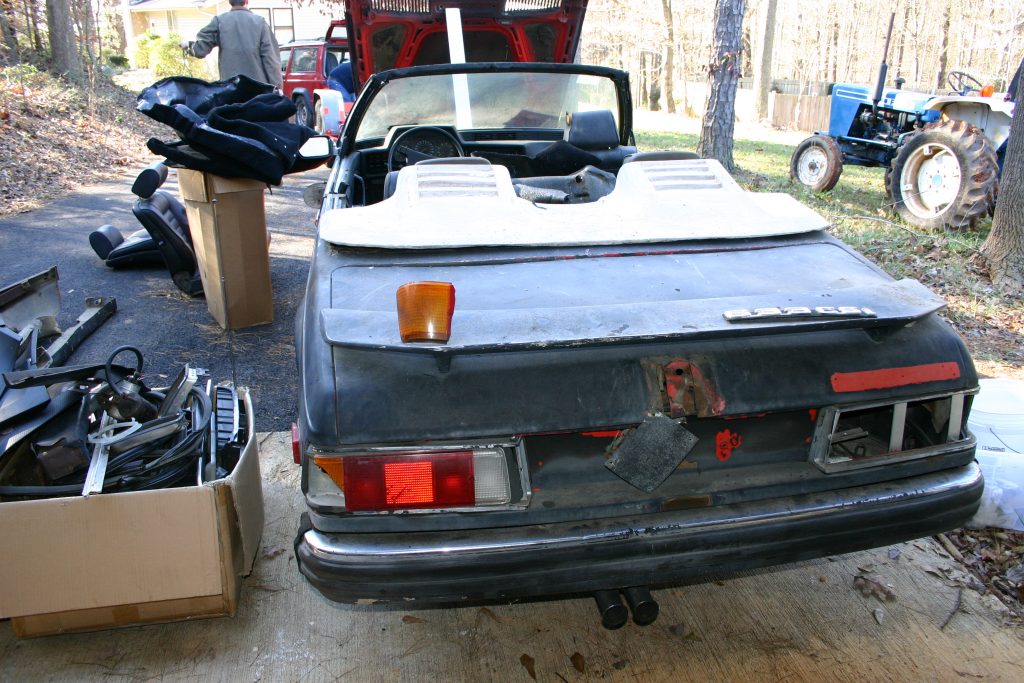
The rear deck was one of the biggest jobs. The original movie deck had disappeared years earlier, so what existed had to be recreated.
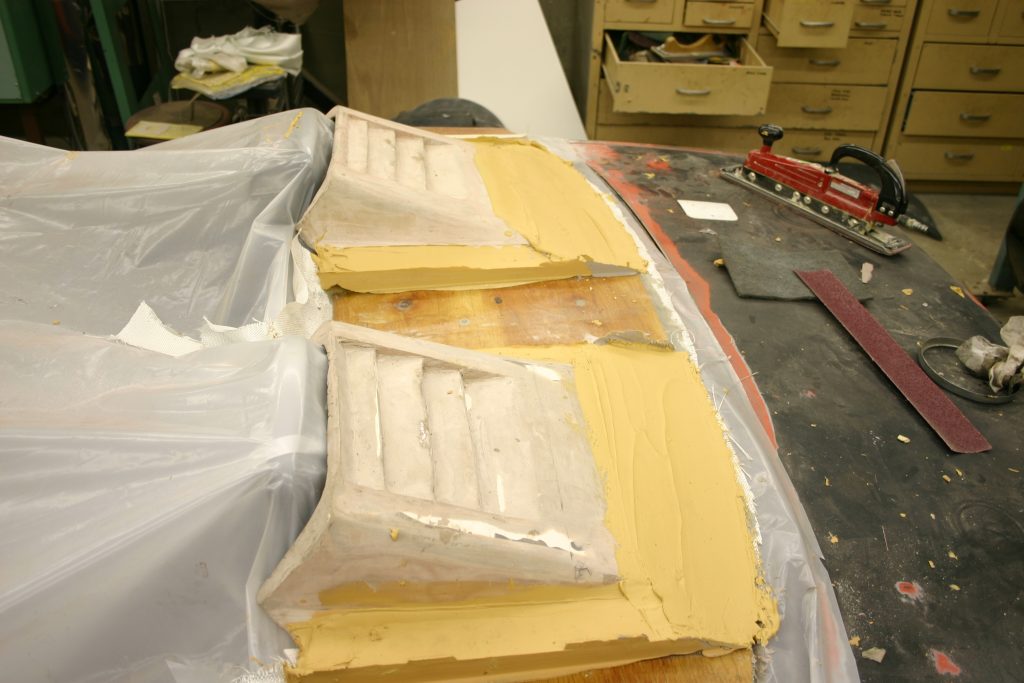
The structure used plywood and fiberglass, along with recreated components and aluminum vents. It also needed to be removable so the mechanical parts underneath could still be accessed.
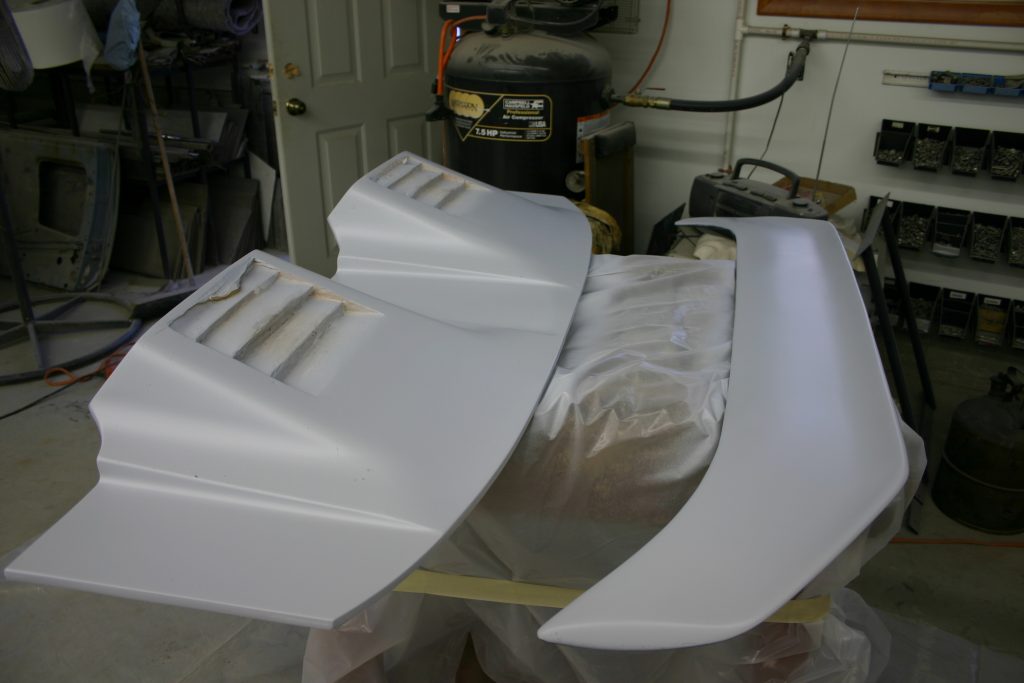
Seeing it sitting separately in primer makes it obvious how much of the car’s Back to the Future identity came from pieces that weren’t BMW at all. They were essentially large custom movie props bolted onto a BMW.
Later, once it was installed, the entire rear of the car suddenly made sense again.
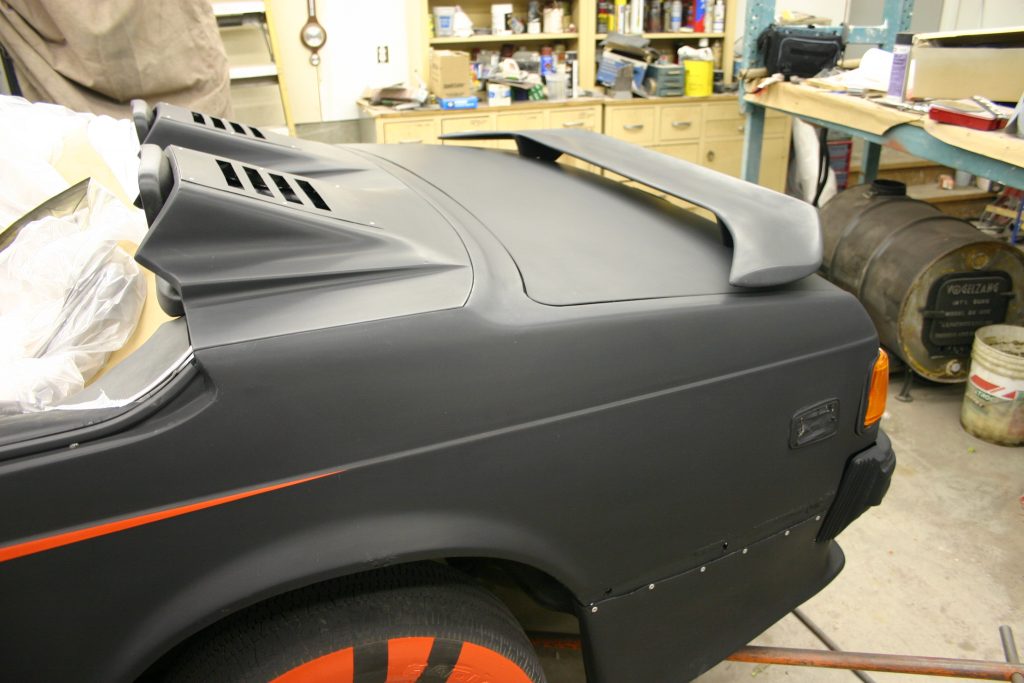
That was one of the biggest visual turning points in the restoration.
Recreating Missing Movie Parts
Some of the missing hover-conversion pieces presented another problem. You can’t exactly call BMW and order a replacement hover pod for a 2015 flying conversion.
Scott Paige of Costume Armour/Cristo Vac in Cornwall, New York helped reproduce the side hover pieces. Original pieces were used to create reverse molds so replacements could be fabricated.
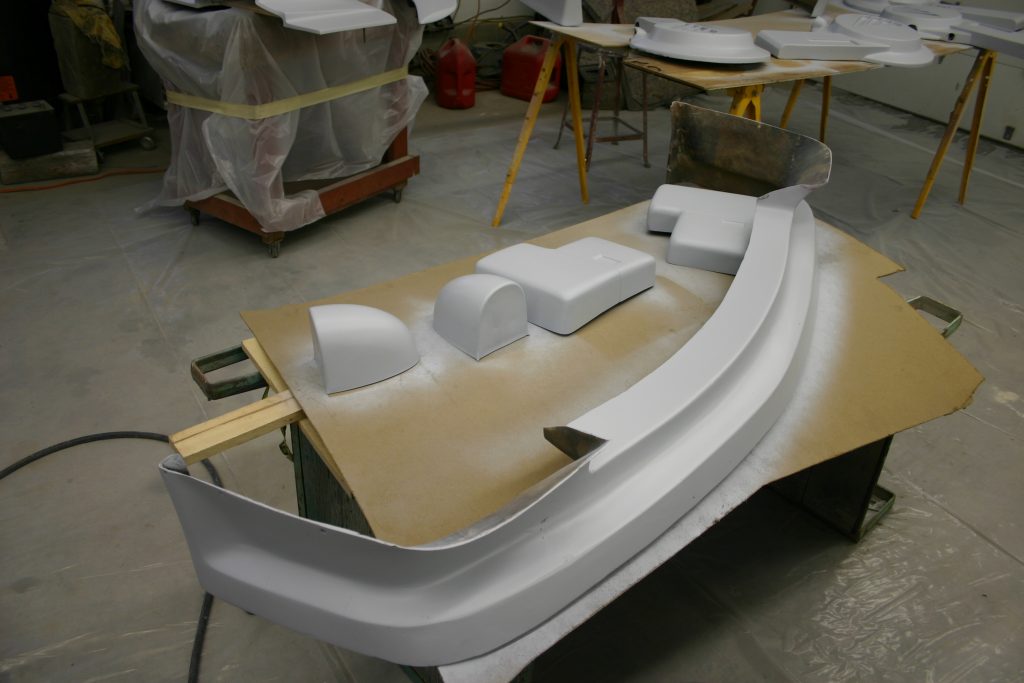
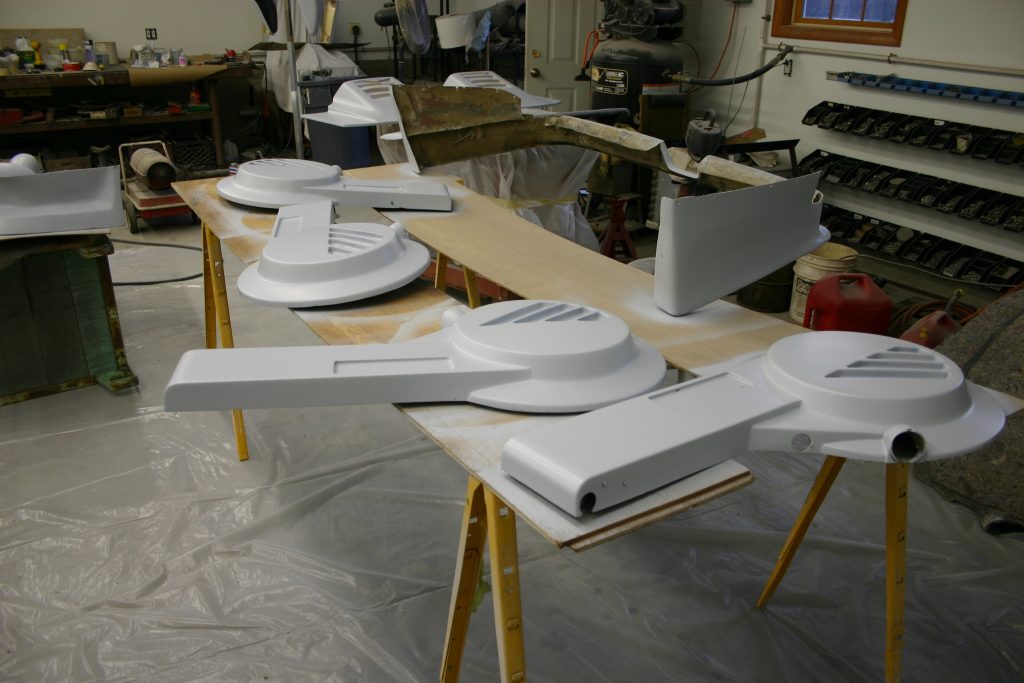
The restoration became a strange combination of automotive bodywork and prop reproduction. One minute we were sanding a BMW; the next we were trying to reproduce something that existed only because a movie designer in the 1980s thought it looked futuristic.
And somehow it all had to fit together.
Sometimes Movie Cars Are Held Together With Whatever Works
One of my favorite things about working on an actual movie car was discovering how some of this stuff had originally been built. Movie props don’t need to last forever. They need to survive filming.
That can lead to some entertaining engineering.
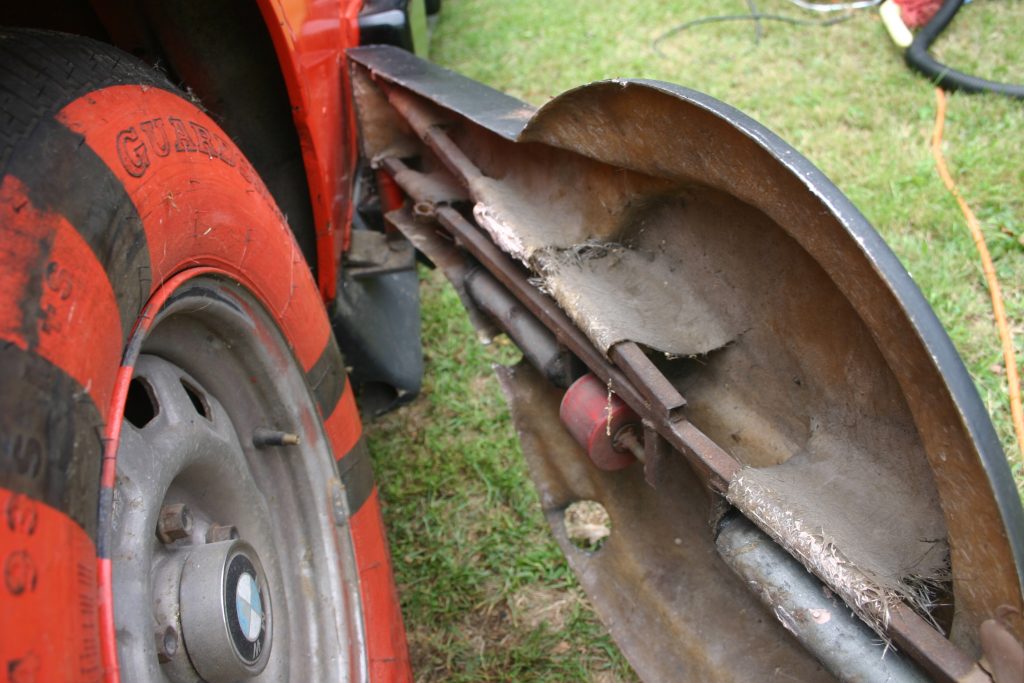
Look behind the polished exterior and you find fiberglass, brackets, tubing, improvised mounts and whatever else solved the problem on the day. That doesn’t make it bad workmanship. It makes it filmmaking.
If the camera couldn’t see it and the part stayed attached long enough to get the shot, it did its job.
Matching the Movie Paint
We also wanted the restored car to look like the car that appeared on screen, not somebody’s modern interpretation of it. Fortunately, some original paint survived.
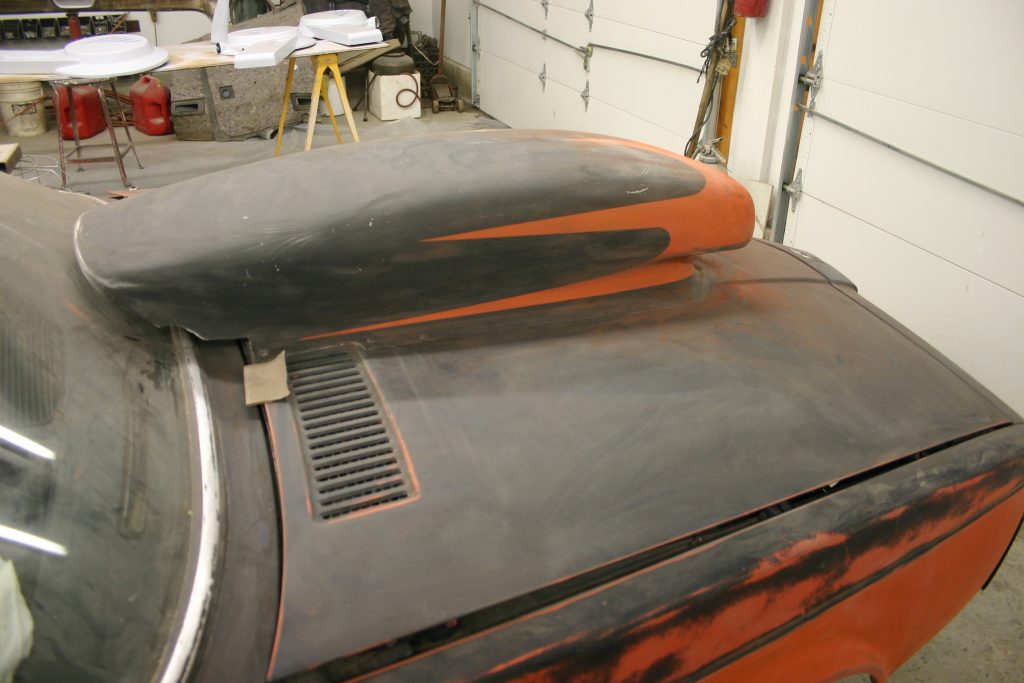
That surviving material gave us something real to work from when recreating the red-and-black scheme. Before any of that could happen, though, the body had to be stripped and corrected.
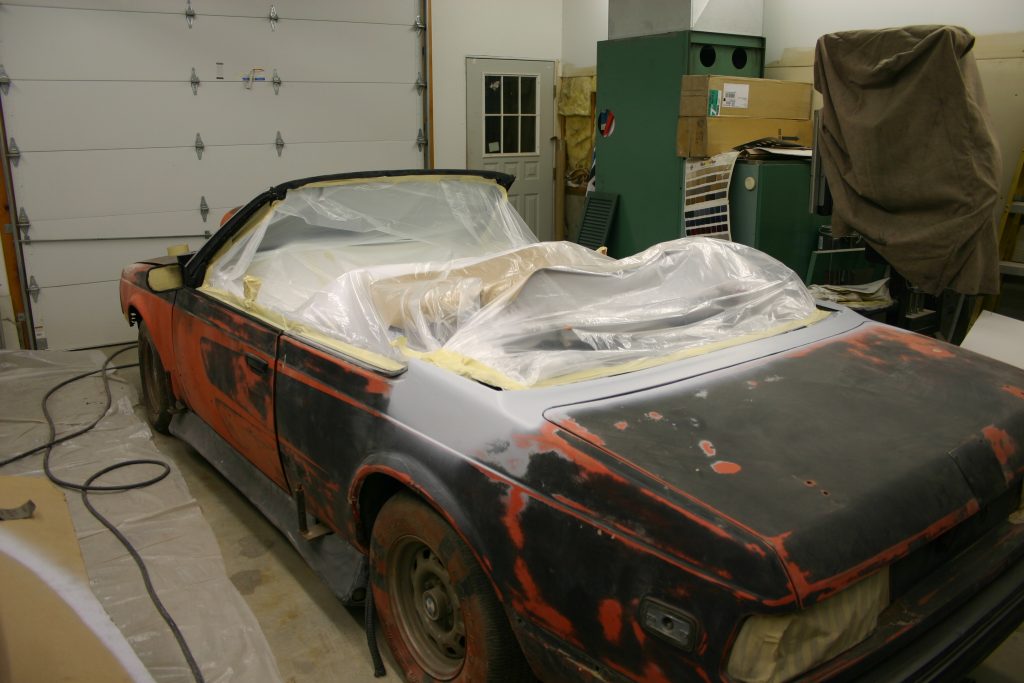
Eventually the patchwork disappeared and the car became one uniform dark shape again.
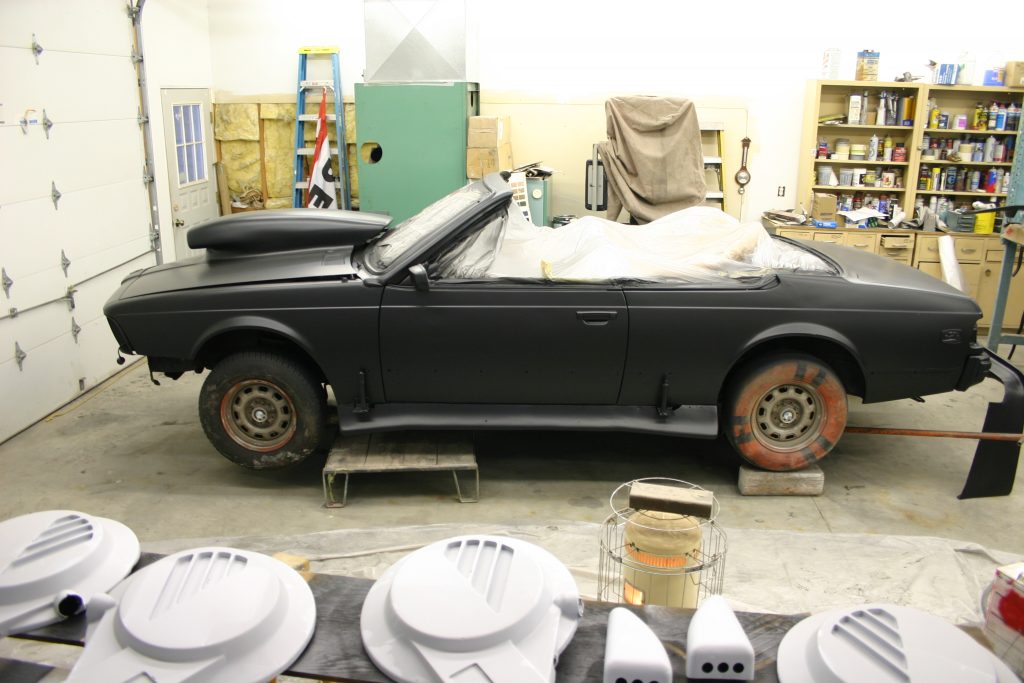
For a brief moment, it looked almost restrained.
That didn’t last.
Griff Comes Back
Then the red started going back on.
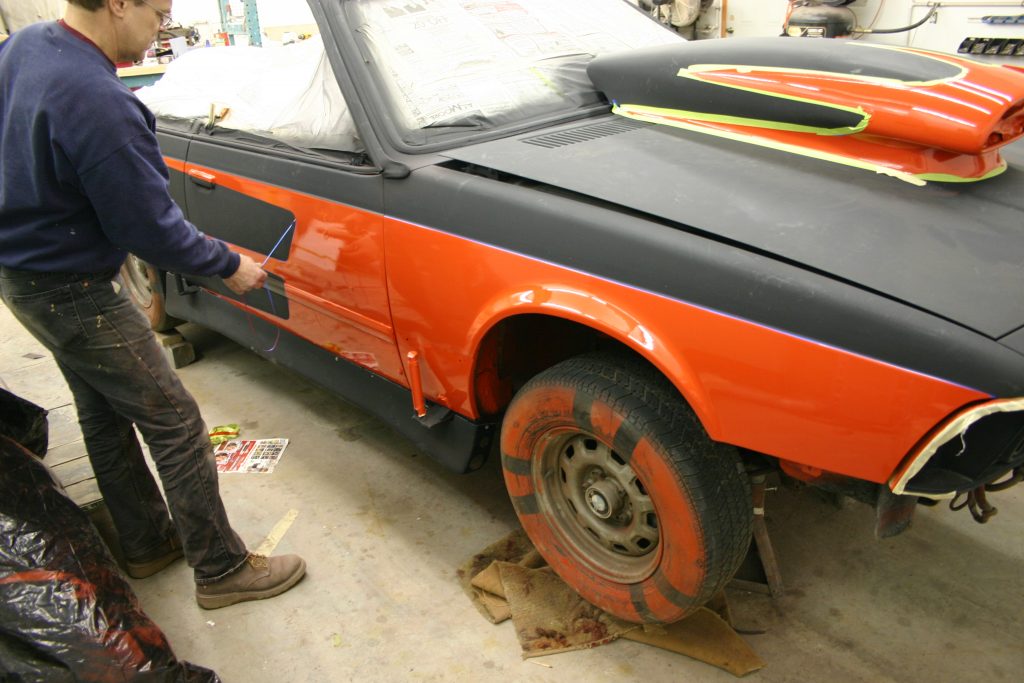
This is where the restoration suddenly stopped looking like a black BMW with odd bodywork. It started looking like Griff’s car.
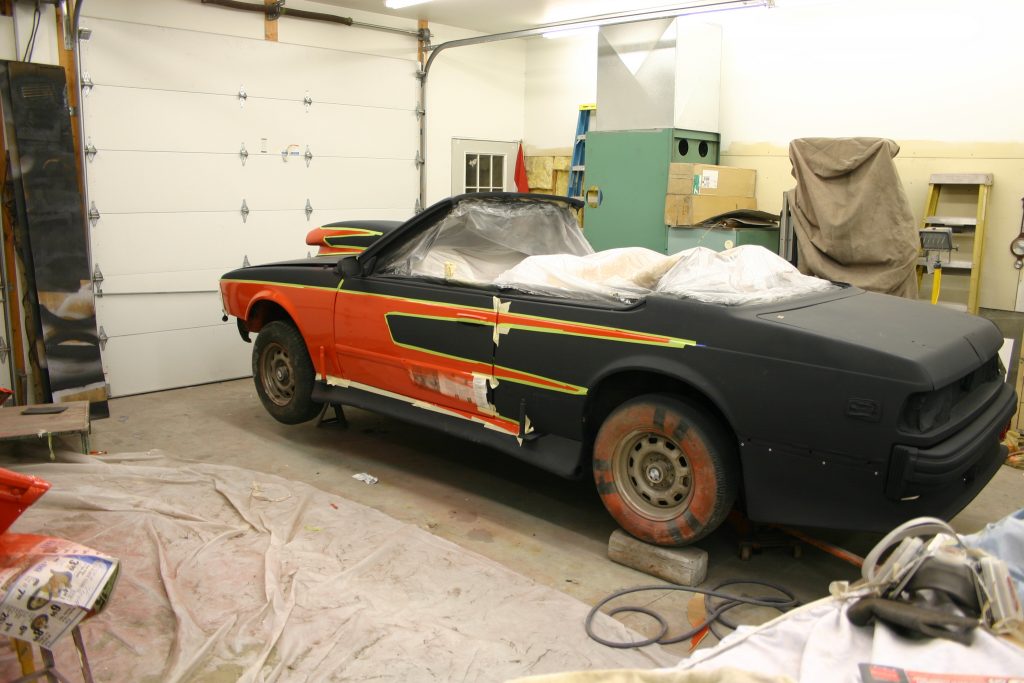
The recreated body pieces were installed, the hover hardware went back on, the corrugated tubing returned, and the wheels regained their bizarre segmented movie paint.
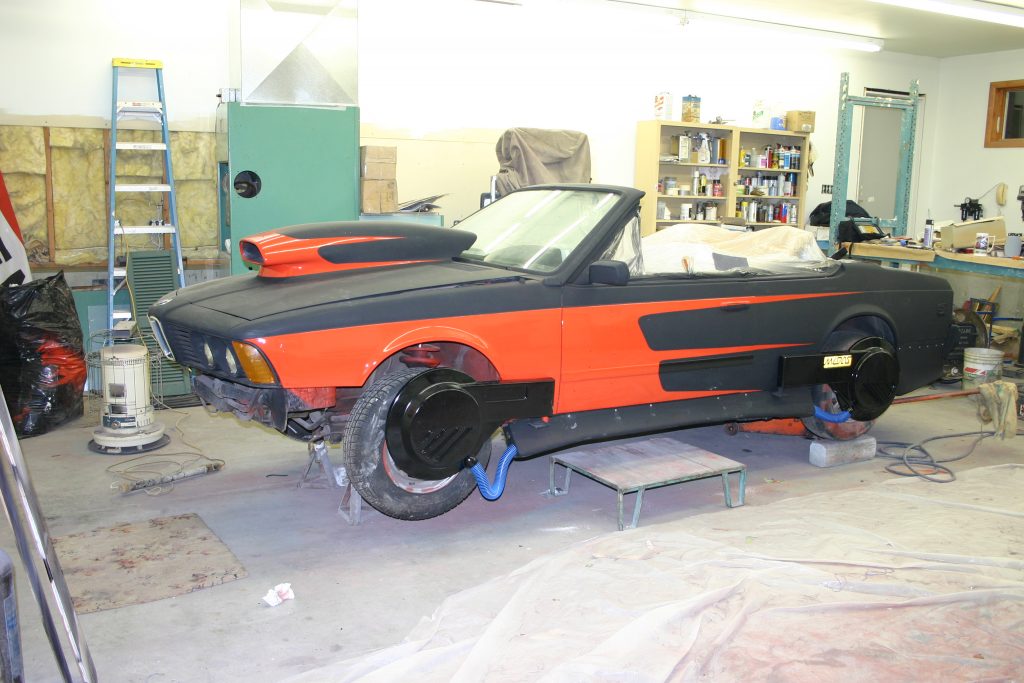
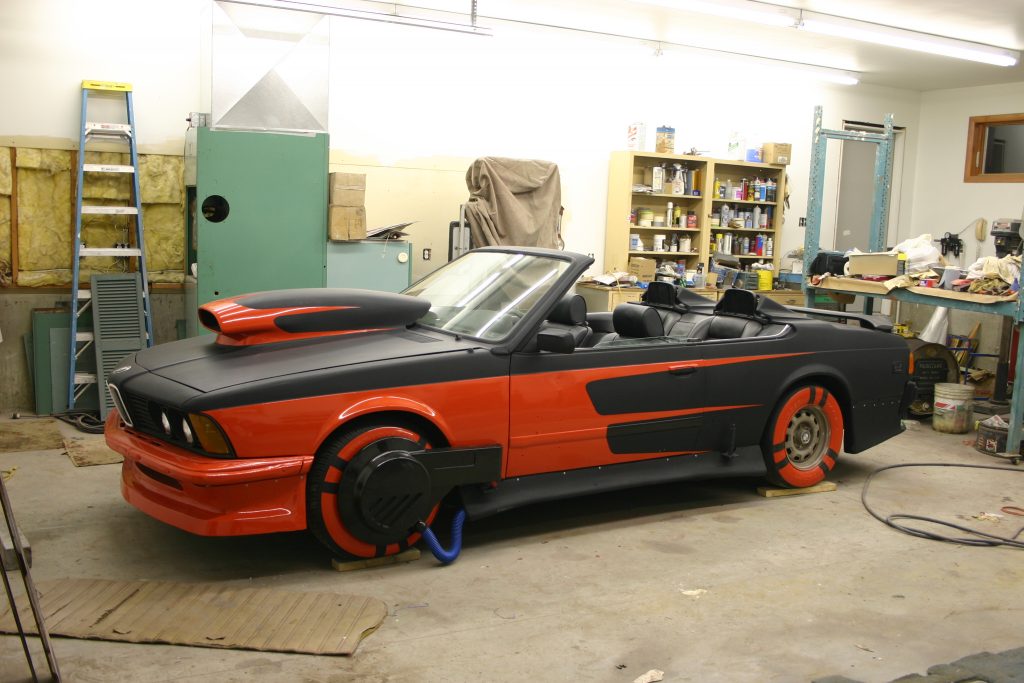
Every new part made the silhouette more familiar.
A Small Taillight Mystery
One of the stranger movie details involved the taillights. The car is a 6-series BMW, but the movie used BMW 320i taillights rather than the proper 633-style units.
Why? Because Griff breaks one.
If production knew a taillight was going to be destroyed during filming, using a cheaper and easier-to-replace unit made perfect sense. I even had a surviving piece of the broken movie lens.
That is exactly the kind of ridiculous little artifact that makes owning an original movie car so much fun.
February 3: Deadline Day
By February 3, we were down to final assembly. The side pods had gone on Wednesday night, and the tubing was being finished on the day of the show.
There was no comfortable buffer and no “we’ll finish the little details next week.” The show was happening. The car had to go.
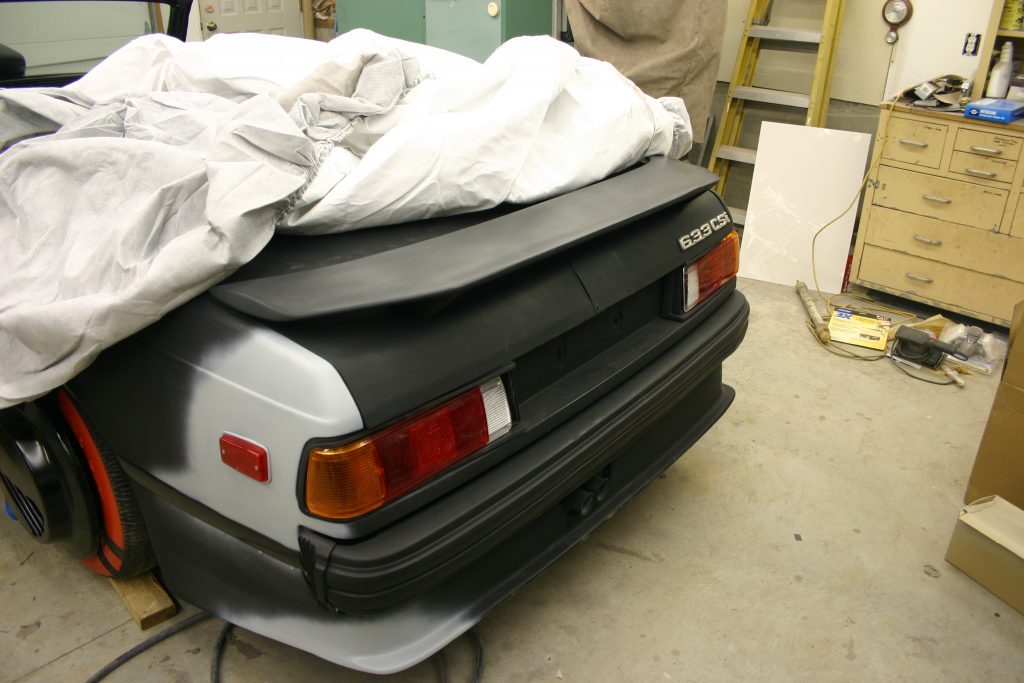
The rear deck was installed, the wing was mounted, the taillights were going back in and the hover hardware was attached.
After weeks of sanding dust, fiberglass, primer, paint and parts spread across the shop, Griff Tannen’s BMW was finally a car again. More importantly, it looked like the movie car again.
Back in Front of an Audience
At the Connecticut Expo Center, something interesting happened. Most people didn’t know what they were looking at. They would stop, stare at it, walk around it and eventually ask:
“What is that?”
But every once in a while, somebody would come around the corner and instantly recognize it. No explanation required. They knew.
That reaction was better than any trophy. The car didn’t win one anyway, and I didn’t care. The accomplishment wasn’t winning a car show. The accomplishment was getting the thing there.
The Finished Car
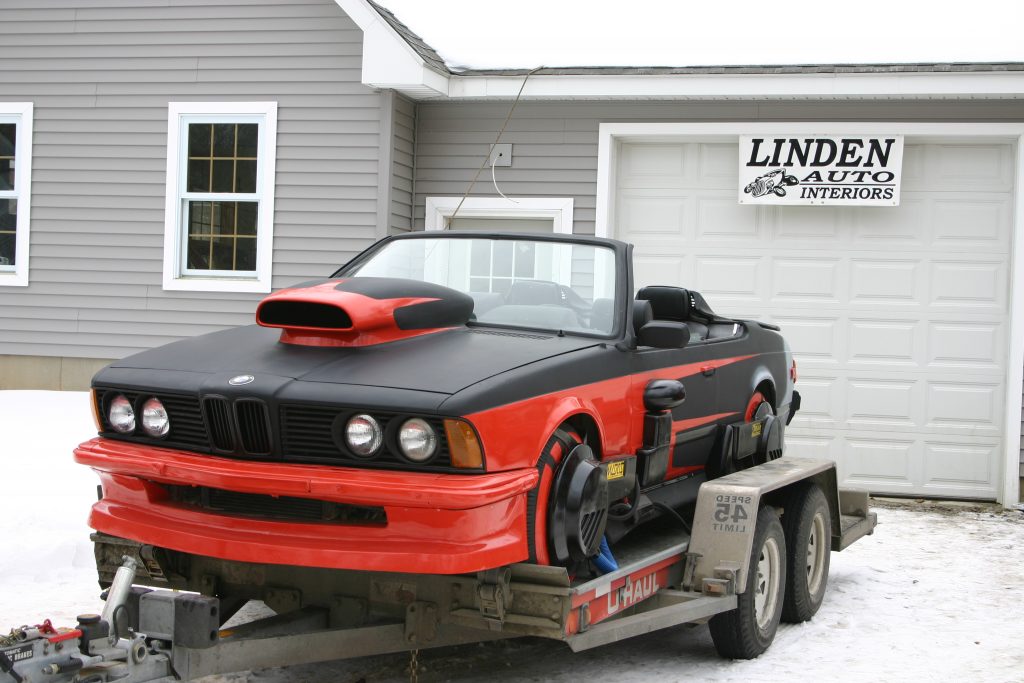
Once everything was together, you could finally appreciate just how bizarre the design really was: the enormous scoop, wheel covers, hover pods, hoses, rear deck, wing and black-and-red paint.
It is very much a design from what people in the late 1980s imagined 2015 might look like. And that’s exactly why I love it.
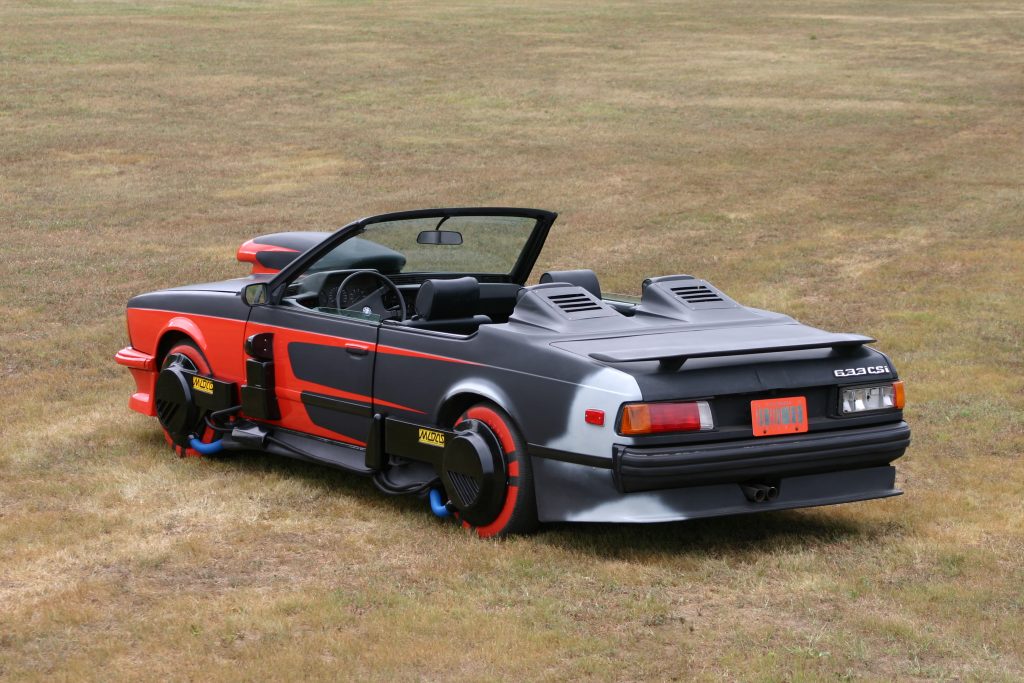
The rear view is especially satisfying because so much of what you’re looking at had to be reconstructed. That entire section of the restoration started as damaged, missing or incomplete movie hardware. Seeing it completed was the payoff.
More Than Just the Car
I eventually sold the BMW in 2015, but owning it led to something I didn’t expect when I bought it: people.
The car introduced me to people throughout the Back to the Future fandom, but it also pulled me into the much larger world of movie cars — owners, builders, collectors, prop makers, fans, people who had worked on productions, and people preserving pieces of movies that otherwise might disappear.
That ended up being worth far more than simply saying I owned a car from Back to the Future. The BMW became an excuse for conversations, road trips, shows and friendships I never would have experienced otherwise.
Years later, it even ended up in professional photography that made the beat-up car I dragged home from Georgia almost unrecognizable.
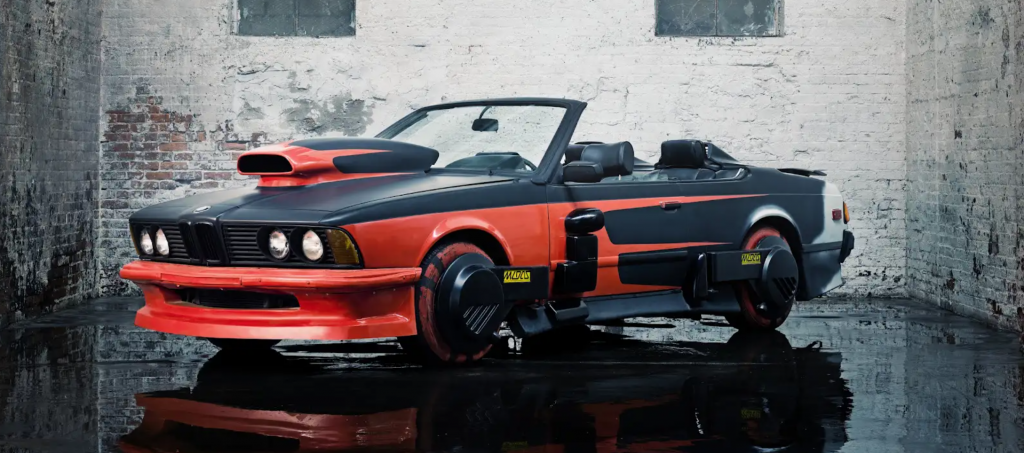
There’s something satisfying about that. The car had been built for a movie about traveling through time, then spent years deteriorating and almost became another discarded movie prop.
Instead, it survived. And for a little while, I got to be part of that story.
George McFly probably said it best:
“If you put your mind to it, you can accomplish anything.”
Even restoring a flying BMW.